
Top Exercises for Hip Pain Relief at Home
Top Exercises for Hip Pain Relief at Home
Hip pain is a common issue that affects people of all ages. Whether it comes from muscle strain, osteoarthritis, poor posture, or prolonged sitting, discomfort in the hip can quickly interfere with walking, bending, or even sleeping. Fortunately, many cases of hip pain can be improved with simple, targeted hip exercises for hip pain that you can do at home. These movements help strengthen the supporting muscles, improve flexibility, and reduce stiffness, allowing you to move with greater comfort and confidence.
Learning the right hip pain exercises and doing them correctly can make a noticeable difference in both mobility and day-to-day comfort. Below is a complete guide to effective at-home exercises, why they work, and when you should consider seeking professional help.
Why Hip Exercises Matter for Pain Relief
The hip joint is one of the largest weight-bearing joints in the body. It relies on a combination of strong muscles, healthy cartilage, and proper alignment to function smoothly. When any of these elements weaken or become strained, pain can appear around the outer hip, groin, buttocks, or lower back.
Hip exercises for hip pain focus on building strength in the glutes, hip flexors, and deep stabilizing muscles. Strengthening these supportive structures eases pressure on the joint itself. Stretch-based exercises relieve tightness, improve range of motion, and help prevent further injury.
Unlike medications, which temporarily mask symptoms, regular exercise addresses the underlying imbalance causing the pain.
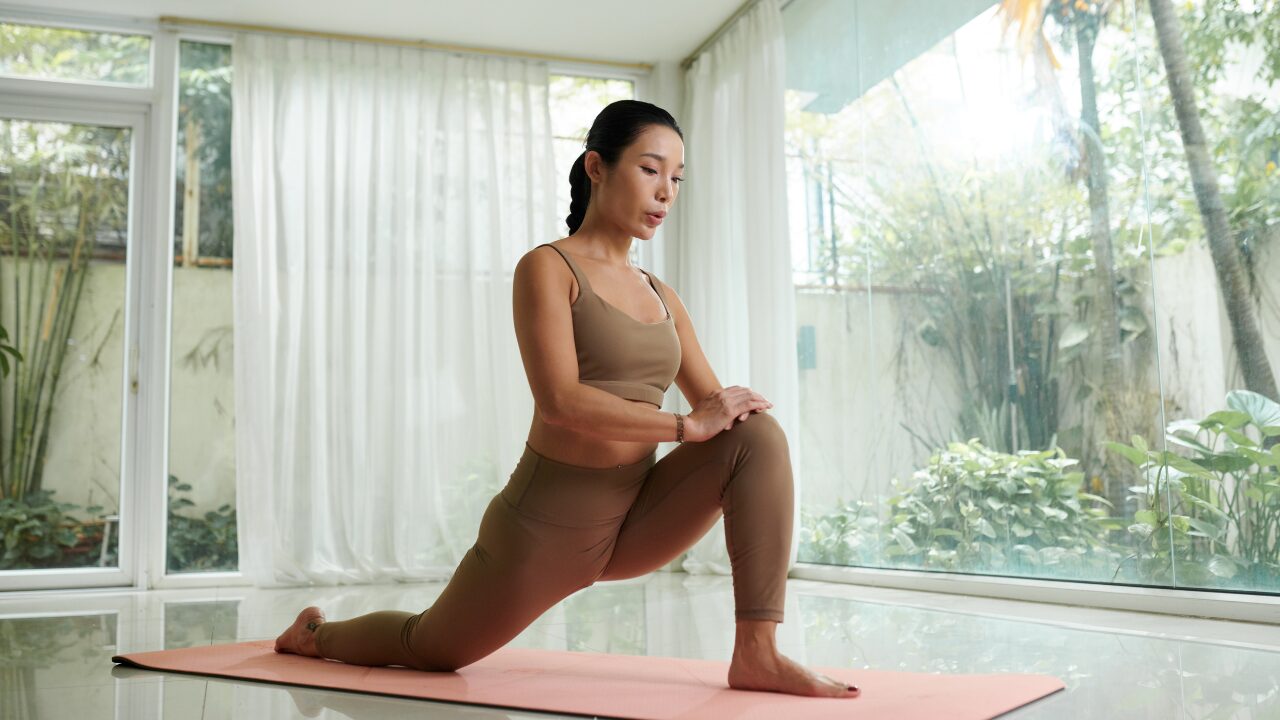
1. Hip Flexor Stretch
Hip tightness is extremely common, especially in people who sit for long periods. A gentle hip flexor stretch helps open the front of the hip and reduce pulling sensations in the lower back.
Start in a half-kneeling position, with one knee on the floor and the other foot in front. Lean forward slightly while keeping your torso upright. You should feel a stretch in the front of the hip on the kneeling side. Hold for 20–30 seconds, then switch legs.
This stretch helps relieve tension, improve posture, and reduce pain caused by muscle stiffness.

2. Glute Bridge
Weak glute muscles often contribute to hip pain because they are responsible for stabilizing the pelvis and supporting the hip joint. Strengthening them through hip pain exercises like the glute bridge can significantly reduce discomfort.
Lie on your back with your knees bent and feet flat on the floor. Lift your hips toward the ceiling while squeezing your glutes. Hold for a moment at the top, then lower slowly. Start with 10–12 repetitions and increase gradually as your strength improves.
Glute bridges activate the glutes and hamstrings, improving hip stability and reducing strain on the joint.
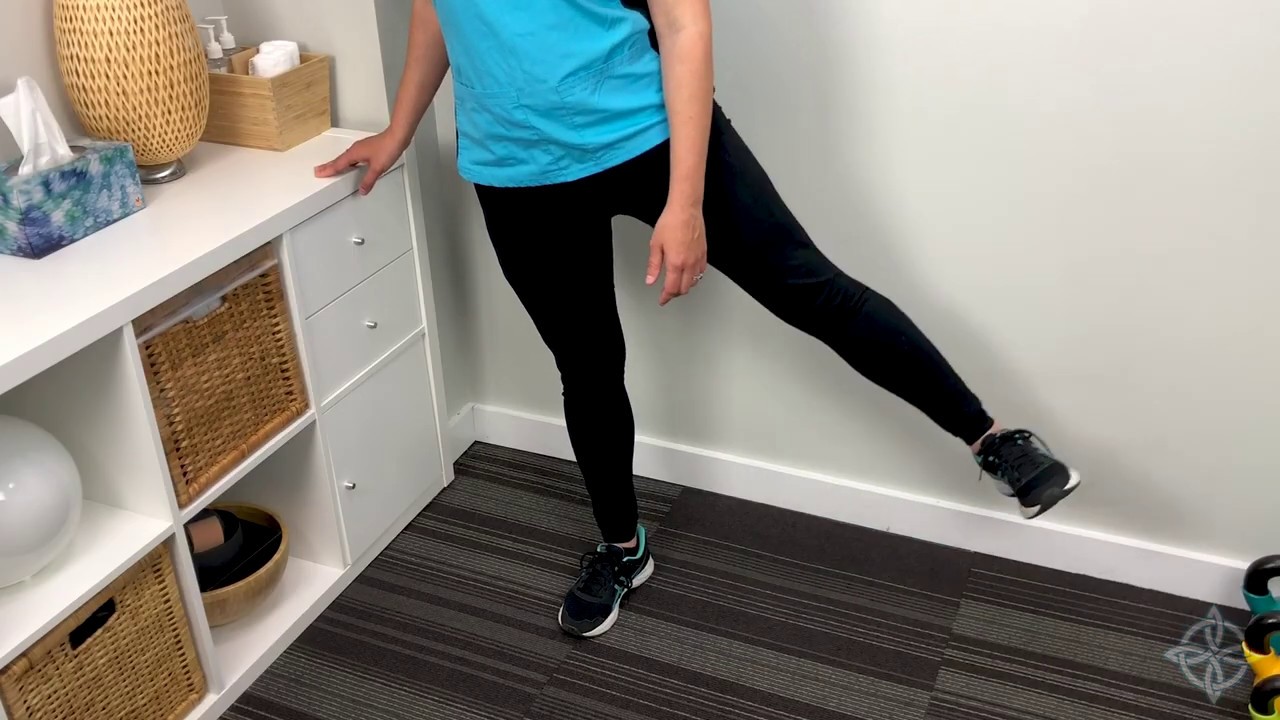
3. Standing Hip Abduction
This exercise targets the outer hip muscles, which help control leg movement and balance. When these muscles weaken, the hip joint is forced to handle more load, which increases discomfort.
Stand tall and hold onto a chair or countertop for support. Lift one leg out to the side without leaning your torso. Slowly lower the leg and repeat 10–15 times before switching sides.
Hip abduction strengthens the gluteus medius, one of the key muscles responsible for maintaining hip alignment.

4. Seated Figure-Four Stretch
For many people, hip pain has a muscular component involving the piriformis or deep glute muscles. This stretch can help release tension in those areas.
Sit on a chair and place your ankle on the opposite knee. Lean forward gently until you feel a stretch in the outer hip and glute. Hold for 20–30 seconds and repeat on the other leg.
This exercise is effective for relieving tightness associated with prolonged sitting or lower-body overuse.

5. Side-Lying Leg Lifts
Side-lying leg lifts strengthen the outer hip muscles and improve overall hip stability. They are simple to perform and beneficial for people with mild to moderate hip discomfort.
Lie on your side with your legs straight. Lift the top leg toward the ceiling in a smooth motion, then lower it slowly. Keep your hips stacked and your torso still. Aim for 10–15 repetitions per side.
Consistency with this exercise can help prevent hip dropping during walking and reduce strain on surrounding tissues.
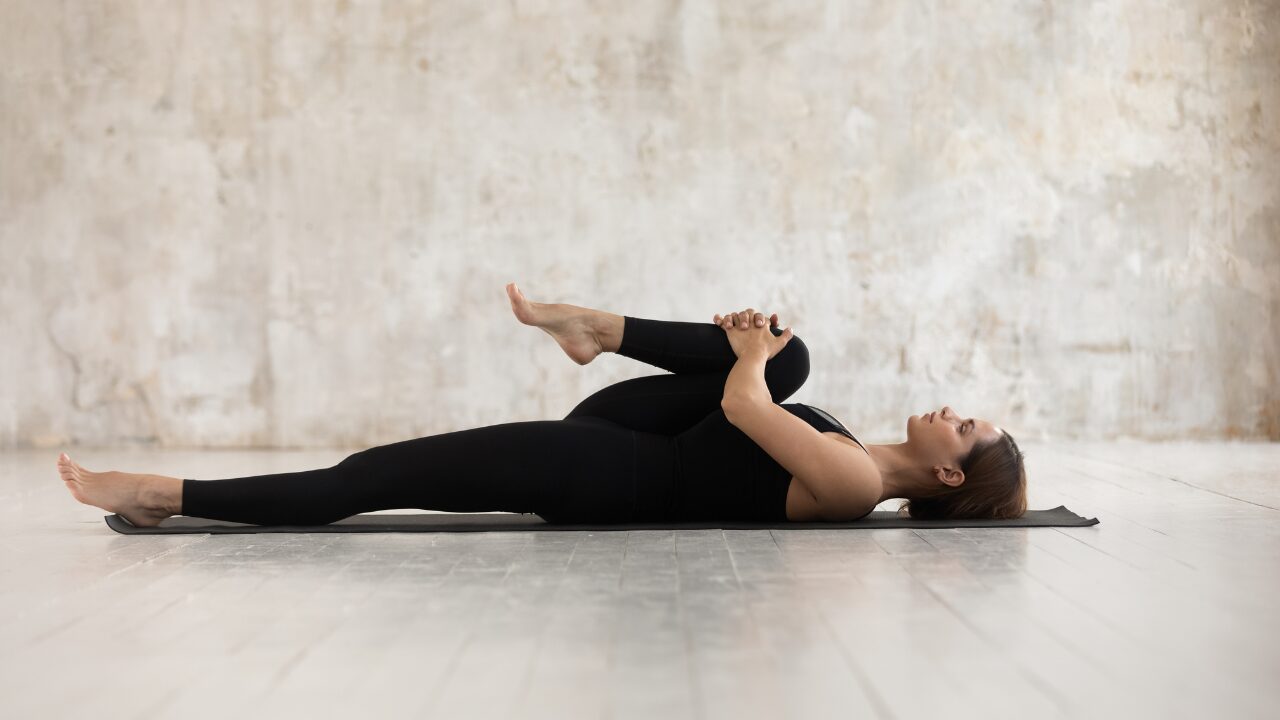
6. Knee-to-Chest Stretch
This gentle stretch helps loosen the hip and lower back, especially when stiffness is most noticeable in the morning.
Lie on your back and bring one knee toward your chest while keeping the other leg extended on the floor. Hold the stretch for 20–30 seconds, then switch legs. To increase the stretch, bring both knees toward your chest at once.
This movement helps relieve tightness, improve mobility, and reduce lower-body tension.
Tips for Doing Hip Pain Exercises Safely
While these hip exercises for hip pain are generally safe and low-impact, proper form is essential. It’s better to move slowly and deliberately rather than rush through the motions. Listen to your body; mild stretching discomfort is normal, but sharp or sudden pain is a sign to stop.
Warming up with a brief walk or gentle movement can make the exercises feel smoother and reduce the chance of strain. Staying consistent, three to five times per week, often yields the best long-term results.
If you’re unsure about an exercise, working with a physiotherapist or pain specialist can help.
When Home Exercises Aren’t Enough
While many people experience relief from regular hip pain exercises, some may find their symptoms persist or worsen. This can happen when the pain is caused by underlying conditions such as osteoarthritis, tendon injuries, bursitis, or nerve irritation.
It may be time to seek professional assessment if:
- Your hip pain lasts more than a few weeks
- Pain interferes with walking, standing, or daily movement
- You notice swelling, clicking, or instability in the hip
- Pain worsens even with stretching and strengthening exercises
Early intervention can prevent symptoms from progressing and help you find the most effective treatment options.
Get Help for Hip Pain in Toronto
If hip pain is limiting your mobility or affecting your daily life, an expert assessment can provide clarity and relief. At Silver Pain Centre, we use a personalized, evidence-based approach to diagnosing and managing chronic pain, including hip-related conditions.
Our 20,000 sq. ft. facility in North York offers shorter wait times, free parking, OHIP-covered consultations and procedures, and access to a full multidisciplinary team, all under one roof. Whether your hip pain is due to muscle tightness, joint degeneration, or nerve irritation, our specialists can help you regain comfort and movement.
Visit us at 4646 Dufferin Street Unit #9, Toronto, ON M3H 5S4, call (416) 512-6407, or complete a self-referral form to get started.
Find Lasting Relief—Start Your Self-Referral Today
At Silver Pain Centre, we understand the challenges of chronic pain. We offer comprehensive care for a wide range of conditions, including joint and back pain, chronic headaches, nerve pain, muscle injuries, post-surgical pain, sports injuries, and more.